Your Child's Brain Knows the Difference: Why a Phone Call From School Changes Everything
Your Child's Brain Knows the Difference: Why a Phone Call From School Changes Everything
As a parent, you've probably felt it yourself—that email from your child's teacher that left you wondering, "What did they *really* mean by that?" You read it twice, maybe three times, trying to decode the tone. Was it a concern? A compliment? Something in between?
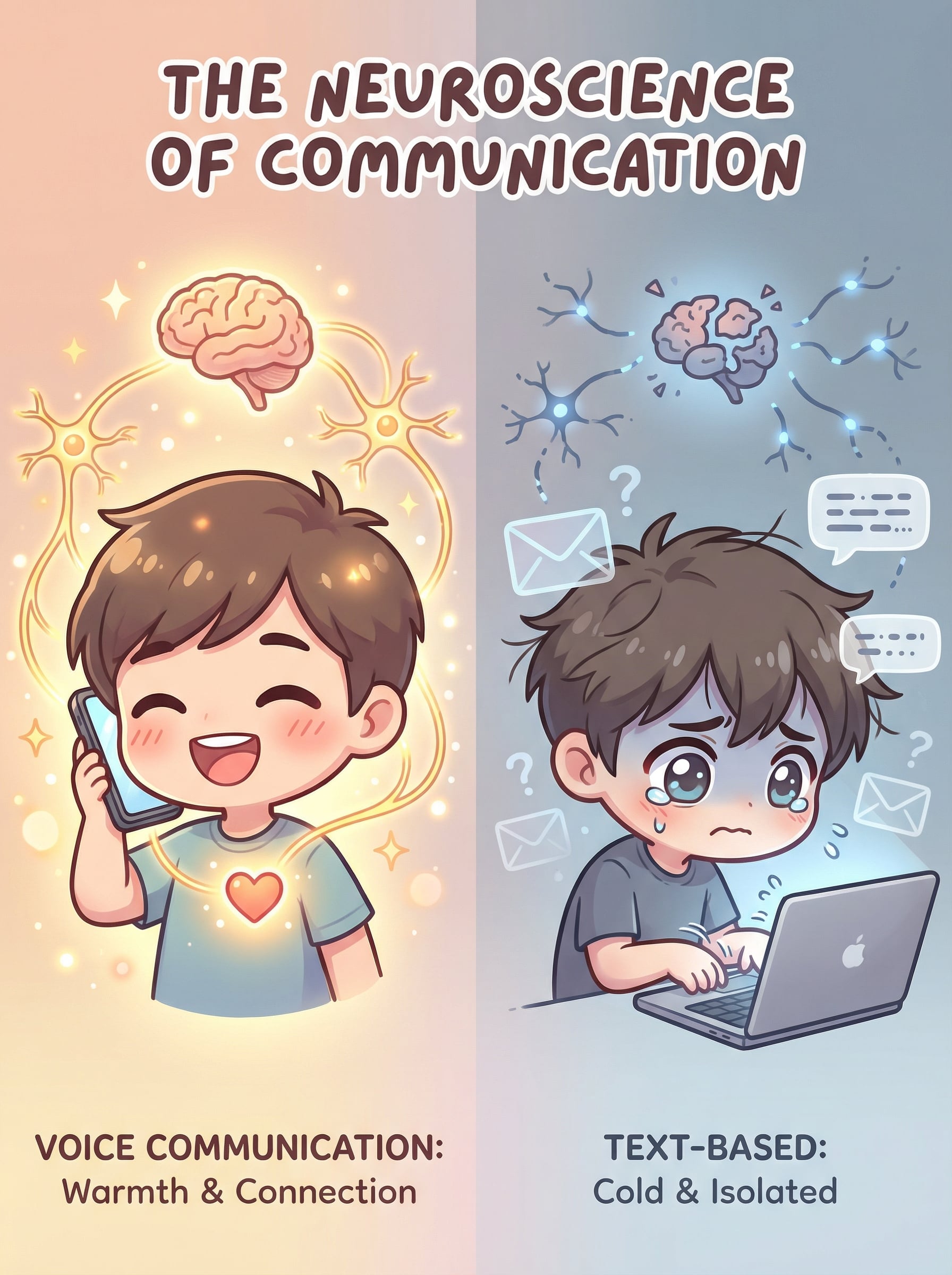
Here's what neuroscience now confirms: your brain wasn't designed to build trust through text. It was designed to connect through voice. And when it comes to your child's education, that distinction matters more than you might think.
5 Insider Secrets About Voice Communication Every Parent Should Know
1. Your Brain Responds to Voice in Milliseconds—Before You Even Think
Within 200 milliseconds of hearing someone's voice, your brain's mirror neurons fire, creating an automatic emotional connection. This happens faster than conscious thought and triggers what scientists call "emotional contagion"—you literally start to feel what the speaker feels. Email simply cannot activate this response.
2. Phone Calls Create Bonds That Emails Never Will
Research from the University of Texas at Austin found something surprising: people predicted phone calls would feel awkward, but when they actually made them, they reported significantly stronger emotional connections—without the anticipated awkwardness. Voice communication consistently produces the connection we actually want, even when we think we'd prefer texting.
3. Half of School Emails Go Unread—Voice Cuts Through
Schools relying solely on email newsletters and online portals have discovered an uncomfortable truth: only about half of parents actually read those messages. But when schools added voice messages to their communication strategy, parent meeting attendance jumped from 3-5 families to more than 20. Voice gets heard.
4. Your Ear May Be More Accurate Than Your Eye
Yale research revealed that people detect emotions more accurately through voice alone than through seeing someone's face—or even seeing and hearing them together. When you hear your child's teacher speak, you're accessing an incredibly sensitive emotional channel that written words can't replicate.
5. Weekly Voice Updates Can Cut Student Failure Rates by 41%
A randomized controlled trial found that simple weekly personalized voice messages from teachers to parents reduced student failure rates from 15.8% to 9.3%. The effect came primarily from preventing complete disengagement—parent communication kept students connected to school.
The Numbers That Matter
- 34x: In-person requests are 34 times more effective than email requests, with phone calls falling in the middle
- 16 percentage points: Schools with strong family engagement saw chronic absenteeism grow 16 points *less* during pandemic disruptions
- $4 per student: The cost of personalized attendance messaging that reduced absenteeism by up to 4.4% annually
What This Means for Your Family
The science is clear: when your child's school communicates by voice, they're activating biological trust-building mechanisms that email simply cannot reach. The warmth in a teacher's tone, the enthusiasm about your child's progress, the calm reassurance during challenging conversations—these carry meaning beyond words.
Classvox was built on this science. It enables teachers to send personalized voice messages to families in multiple languages, at scale, while staying fully FERPA compliant. Parents hear directly from educators celebrating their child's wins and partnering on growth areas—without teachers needing hours for individual calls.
Your Next Step
Ready to experience the difference voice makes? Ask your school if they're using Classvox, or visit classvox.com to learn how AI-powered voice communication is transforming family engagement in schools like yours.
Because your brain—and your child's success—deserve more than another unread email.
Tags
Related Articles
Why Your Kid's School Just Got a Lot Better at Getting Through to You
Discover how automated communication systems are transforming parent-school connections.
Read more →The 3-Minute Call That Can Transform Your Child's School Year
Research shows how positive teacher-parent communication drives academic success.
Read more →