When a Parent Breaks Down on the Phone: What Every Family Should Know
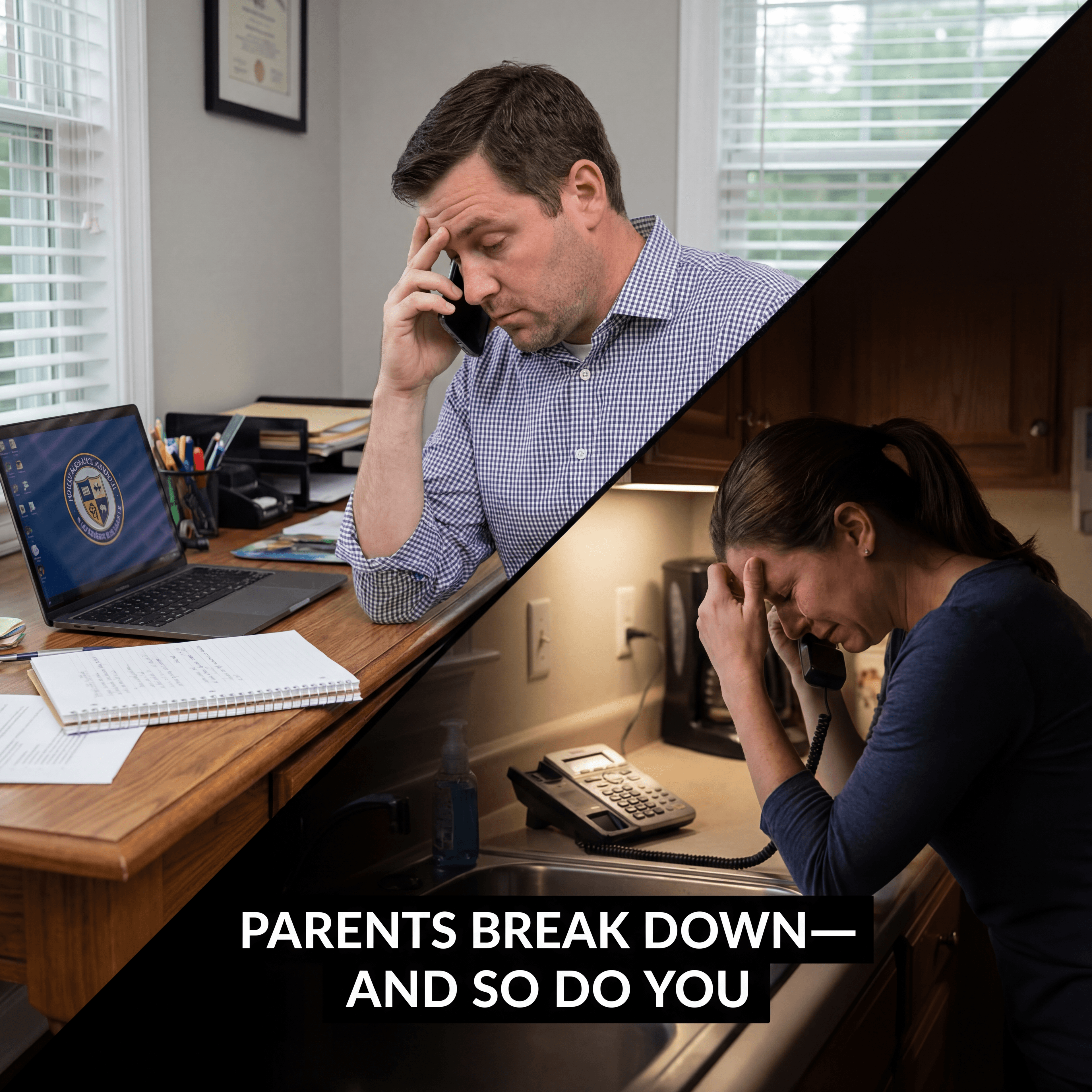
When a Parent Breaks Down on the Phone: What Every Family Should Know
The hidden toll of emotional conversations—and how better communication helps everyone
We've all been there. You get a call from your child's teacher, and suddenly emotions take over. Maybe it's tears. Maybe it's frustration bubbling up from weeks of worry. Maybe it's the fear that your little one is struggling and you didn't know.
Here's what most parents don't realize: those emotionally charged phone calls affect teachers deeply—and that impact ripples right back to your child's classroom experience. New research reveals that difficult parent-teacher conversations are driving educator burnout at alarming rates, with real consequences for student outcomes. Understanding this dynamic can help you become a more effective advocate for your child while building the partnership your family deserves.
5 Insider Secrets About Parent-Teacher Communication
1. Your Teacher Is Probably Dreading That Call Too
Phone calls rank among the most anxiety-inducing communication formats in education. Teachers often make these calls during planning periods or after exhausting days in the classroom, when they're already depleted. When emotions run high, both sides walk away stressed—and that stress doesn't just disappear.
2. Emotional Conversations Create a Ripple Effect in the Classroom
When teachers experience difficult parent interactions, research shows they become less emotionally available to students. Stressed teachers are more likely to misinterpret student behavior and use reactive discipline. Your child's classroom climate is directly connected to how supported their teacher feels.
3. Most Teachers Never Received Training for These Moments
Here's a shocking gap: communication skills for handling difficult conversations are what educators say they need most, yet teacher preparation programs rarely address them. Teachers are experts in curriculum—not crisis communication. They're often learning on the fly.
4. Timing Matters More Than You Think
Late evening calls expecting immediate responses put teachers in impossible positions. They're caught between family time and parental demands, creating resentment and burnout. Respecting communication boundaries isn't just polite—it's strategic for getting better outcomes for your child.
5. Proactive Communication Prevents Most Conflicts
Schools that build strong family relationships before problems arise see dramatically fewer emotionally charged interactions. When positive communication happens consistently, difficult conversations become collaborative problem-solving instead of adversarial confrontations.
The Numbers Tell the Story
- 43% of school staff report an increase in challenging complaints from parents
- 37% of educators feel parents are less supportive regarding student behavior
- Teachers who experience repeated emotional interactions show higher rates of depression, anxiety, and intention to leave the profession
- Students in classrooms with highly stressed teachers demonstrate worse behavior and lower academic achievement
What This Means for Your Family
The research is clear: better parent-teacher communication benefits everyone—your child most of all.
ClassVox was built to solve exactly this challenge. Our platform creates structured, positive communication channels between families and educators, reducing the anxiety of phone calls while keeping you informed and engaged. With ClassVox, you can share updates, celebrate wins, and address concerns through a system designed to build relationships—not strain them.
Ready to transform how you connect with your child's school?
Visit classvox.com to see how smarter communication tools create calmer conversations and better outcomes for your child.
Know another parent who dreads school calls? Share this newsletter and help them discover a better way.
Tags
Related Articles
Why Your Kid's School Just Got a Lot Better at Getting Through to You
Discover how automated communication systems are transforming parent-school connections.
Read more →The 3-Minute Call That Can Transform Your Child's School Year
Research shows how positive teacher-parent communication drives academic success.
Read more →