The Unnecessary Language Gap That's Holding Back ELD Students
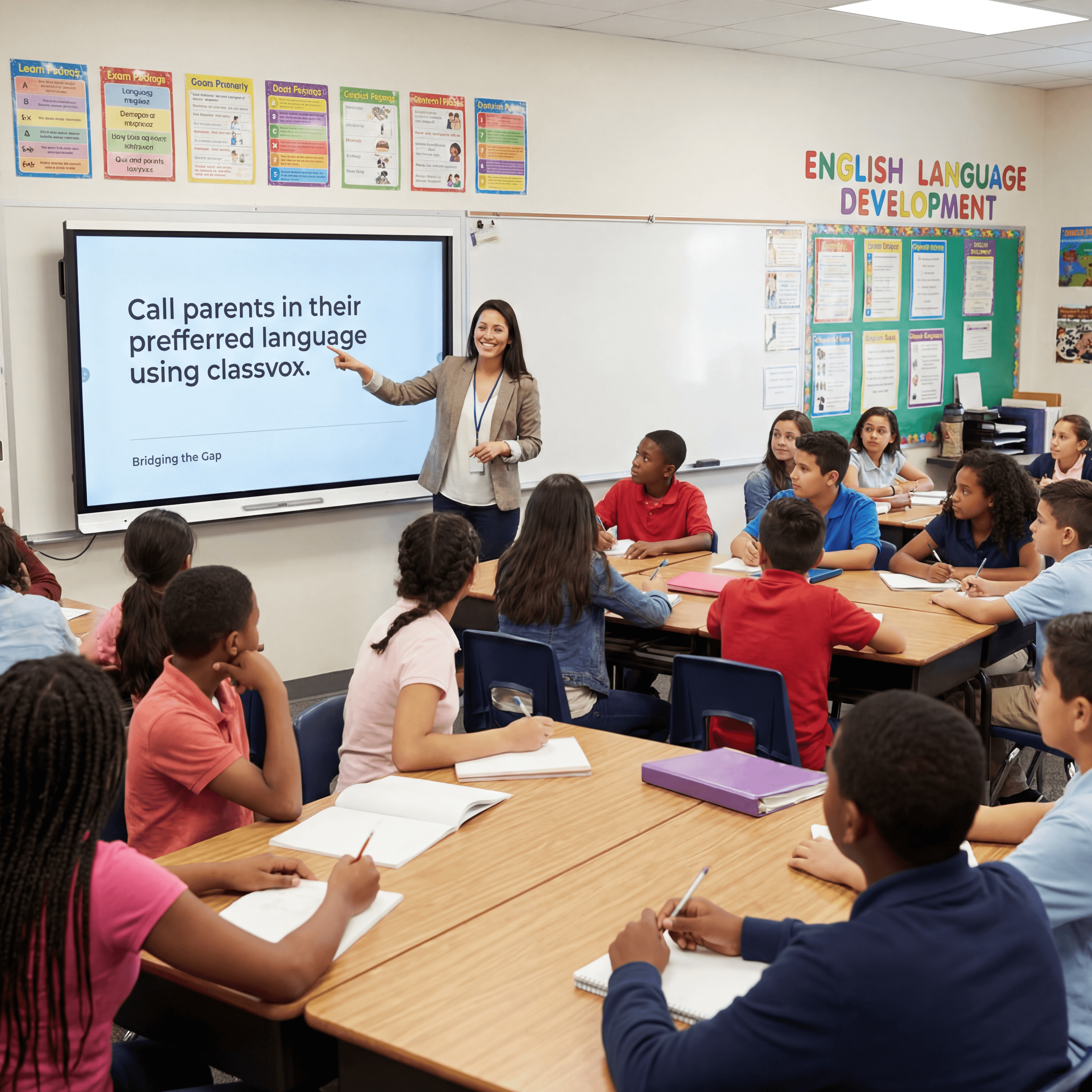
The Unnecessary Language Gap That's Holding Back ELD Students
Your child's teacher wants to call you. But what happens when they literally can't speak your language?
Right now, more than 5.3 million students in American public schools are classified as English learners. These children come from homes where Spanish, Arabic, Chinese, Vietnamese, and dozens of other languages are spoken. Yet here's the disconnect that should concern every parent and educator: only 13 percent of K-12 teachers speak a non-English language at home, compared to 21 percent of children living in multilingual households.
This isn't just a statistic—it's a barrier that separates millions of families from meaningful participation in their children's education. And research shows it's directly impacting student success.
5 Insider Secrets Every Parent Should Know About School Communication
1. More Than Half of Teachers Have Never Been Trained to Work With Your Family
Fifty-one percent of educators report receiving zero professional development on how to work with families of English learners. That means the majority of teachers want to connect with you but simply don't know how.
2. Your Child's Home Language Is Actually a Brain-Building Superpower
Research confirms that bilingual children develop stronger executive function—the brain's ability to solve problems, plan ahead, and maintain focus. Students in two-language programs actually outperform their English-only peers by eighth grade. Your family's language isn't a barrier to English success; it's a foundation for it.
3. Phone Calls Beat Emails for Building Real Partnerships
Studies show phone communication creates deeper personal connections and clearer understanding than text-based messages. For families who may struggle with written English, voice communication removes a significant barrier. The challenge? Teachers rarely have time to make individual calls, especially when they need an interpreter.
4. "Lack of Engagement" Usually Means "Lack of Access"
When multilingual families don't show up to school events, it's rarely about commitment. Research identifies real obstacles: work schedule conflicts, transportation challenges, childcare needs, and yes—communication barriers that make families feel unwelcome. Over 42 percent of school administrators acknowledge these barriers prevent trusting relationships from developing.
5. Technology Now Makes Multilingual Communication Possible for Every Teacher
Here's the good news: AI-powered platforms are transforming what's possible. Tools like Classvox enable teachers to send automated phone calls in 13+ languages—including Spanish, Chinese, Arabic, Vietnamese, and Korean—without the teacher being multilingual. Parents receive calls and respond via voice message in their preferred language, and teachers get dual-language transcripts of every conversation. It's FERPA-compliant, integrates with school systems, and eliminates the anxiety and time burden that prevents most teachers from calling home regularly.
The Numbers Don't Lie
- 5.3 million English learner students in U.S. public schools
- 51% of teachers have received no training on engaging EL families
- 40 percentage points separate EL students from peers in reading and math achievement
- Only 59% of EL students graduate high school in four years
- 13+ languages supported by Classvox for automated family outreach
What You Can Do Right Now
Whether you're a parent wondering why you rarely hear from your child's school, or an educator struggling to reach multilingual families, the solution starts with removing communication barriers.
Parents: Ask your school what tools they use for multilingual communication. Advocate for technology that speaks your language.
Educators and Administrators: Explore how Classvox can help you reach every family consistently—without adding to your already overwhelming workload.
Every family deserves to be a true partner in their child's education. Language shouldn't stand in the way.
Have questions about bridging the communication gap at your school? Visit classvox.com to learn how AI-powered multilingual calling is changing family engagement.
Tags
Related Articles
Why Your Kid's School Just Got a Lot Better at Getting Through to You
Discover how automated communication systems are transforming parent-school connections.
Read more →The 3-Minute Call That Can Transform Your Child's School Year
Research shows how positive teacher-parent communication drives academic success.
Read more →