5.3 Million Students' Parents Can't Understand Your School's Messages—Here's What's Really Happening
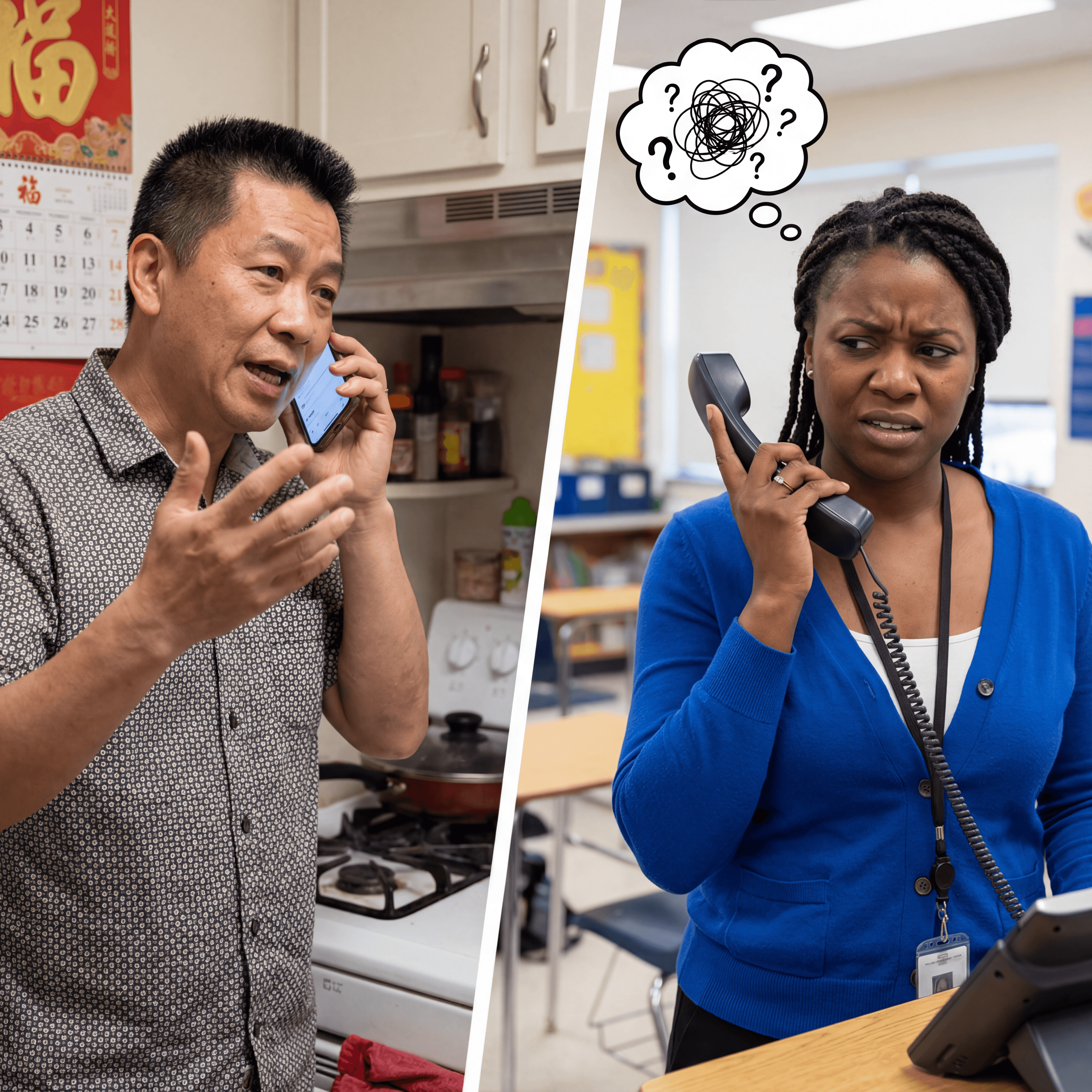
5.3 Million Students' Parents Can't Understand Your School's Messages—Here's What's Really Happening
And what the smartest schools are doing about it right now.
If you're a parent who speaks a language other than English at home, you already know the frustration: important papers you can't fully understand, parent-teacher conferences where something always gets lost, and that nagging feeling that you're missing half of what's happening in your child's education.
You're not alone. Nearly 22 percent of American children speak a non-English language at home—and for two decades, schools have struggled to close the communication gap. The good news? Solutions exist that can transform how your family connects with teachers. Here's what the research reveals.
5 Insider Secrets Schools Don't Tell You About the Language Gap
1. The "Engagement Gap" Has Barely Budged in 20 Years
Federal data shows English-speaking parents are still 12 percentage points more likely to attend school meetings than Spanish-speaking parents—a gap that hasn't meaningfully changed since 1999. The problem isn't motivation; it's access. When 69 percent of Spanish-speaking parents who try to participate report that language barriers made it difficult, we're looking at a system failure, not a family failure.
2. Your Child Shouldn't Be Your Translator
Nearly half of teachers admit to relying on students—sometimes even siblings—to interpret during parent communication. This puts kids in impossible positions: they lack the vocabulary for complex educational discussions, may filter uncomfortable information, and shouldn't carry the weight of translating their own behavioral or academic concerns. Professional solutions matter.
3. 28% of Schools Don't Translate Anything At All
That's right—more than one in four schools provide zero translation for parent correspondence. And even among schools that do translate, many rely on whoever happens to speak another language on staff, rather than accurate, culturally appropriate messaging.
4. Strong Family Engagement Protects Academic Achievement
Schools with robust family communication saw 37 percent less severe math proficiency drops and 27 percent less severe reading drops during the pandemic compared to schools with weak engagement. When parents stay connected, students stay on track—period.
5. Automated Multilingual Tools Are Changing the Game
The smartest schools aren't waiting for bilingual staff to appear. They're using platforms like Classvox.com that automatically deliver messages in parents' preferred languages—13+ languages including Spanish, Chinese, Arabic, Vietnamese, and more. Teachers compose once; parents receive a natural-sounding call in their own language, complete with transcripts.
The Numbers That Should Concern Every Parent
- 5.3 million English learners enrolled in U.S. public schools
- 69% of Spanish-speaking parents report language barriers when trying to participate
- 41% reduction in course failures when schools implement consistent family communication
- 40% increase in homework completion when teachers communicate regularly with families
What You Can Do Right Now
Ask your school one question: "How do you communicate with families who don't speak English?"
If the answer involves shrugs, student interpreters, or "we send things home in English"—you've identified a problem worth solving. Schools using Classvox.com can reach every family in their preferred language, automatically and consistently, while maintaining complete FERPA compliance.
Your engagement in your child's education shouldn't depend on which language you speak at home. The right tools make sure it doesn't.
Want more insights like this? Share this newsletter with another parent who deserves to stay connected—and subscribe for weekly updates on what's really happening in K-12 education.
Tags
Related Articles
Why Your Kid's School Just Got a Lot Better at Getting Through to You
Discover how automated communication systems are transforming parent-school connections.
Read more →The 3-Minute Call That Can Transform Your Child's School Year
Research shows how positive teacher-parent communication drives academic success.
Read more →